Showing posts with label writing. Show all posts

Aug 14, 2014

Writing: Mirror, Mirror


This is a piece of flash fiction (100 words or less) I wrote for a contest. One of the judges contacted me regarding the anecdotal tone. It is not based on a true event. I just write as if things had been true. Isn't that what we're supposed to do?

Mirror, Mirror by David W Henderson, copyright 2010. All rights reserved.

As Abby sang “Hakuna Matata,” it darted into the road from the underbrush. Should I swerve? I held my breath. My indecision thrust the vehicle forward.  It sat on its haunches and turned toward me. Disappearing from view beneath my hood, it darted leftward. The steering wheel wiggled against a small bump. “Thudathump” echoed from the rocker panel. In the rearview, I saw the small, furry grey squirrel lying in the road – tail raised stiffly in surrender. 

“Did you kill him, Daddy,” my daughter asked from the rear seat as our eyes met in the mirror.

Note: the story above is fiction and not anecdotal. It is owned and copyrighted by David Henderson living in Redland, Prescott, Arkansas at the time of the writing. All rights reserved.

Aug 11, 2014

Writing: Bobby Pins in the Vent

Note: From time to time, I will post some free writing on here. This flash fiction story came to me this morning:


Bobby Pins in the Vent
I sat on the edge of our daughter's bed for the first time since her accident. Since she died, is what I should say. I looked around her room at everything. At nothing. I saw posters she hung, paintings she had done, stuffed animals she kept on her pillow. The room was full. It was empty. I lowered my head, resting my face in the palms of my hands, trying to make sense of it all. When I finally pulled my hands away, my eyes fell upon the vent in the floor near my feet. Inside, I saw two bobby pins and I cried.

Note: the story above is fiction and not anecdotal. It is owned and copyrighted by David Henderson living in Redland, Prescott, Arkansas at the time of the writing.  All rights reserved.

Jul 13, 2013

100 words or less: Mirror Mirror

Every once in a while I enter writing contests. I'm not one of those "gotta win" kinda folks. I just like to throw my stuff in the ring and let other reads the random stuff on my mind.  This flash fiction story didn't win any prizes, but it did generate a bit of a conversation between me and the person I submitted the entry. Basically, she wanted to be absolutely sure it wasn't based on a true story. It isn't, but evidently I write fiction (sometimes) that seems to real to be made up...


Mirror, Mirror by David W Henderson:
As Abby sang “Hakuna Matata,” it darted into the road from the underbrush. Should I swerve? I held my breath. My indecision thrust the vehicle forward. It sat on its haunches and turned toward me. Disappearing from view beneath my hood, it darted leftward. The steering wheel wiggled against a small bump. “Thudathump” echoed from the rocker panel. In the rearview, I saw the small, furry grey squirrel lying in the road – tail raised stiffly in surrender. 
“Did you kill him, Daddy,” my daughter asked from the rear seat as our eyes met in the mirror.


Jan 22, 2012

On the iBooks Author EUA

Okay, this was a response to a post about the "whining" going on regarding the Apple iBooks EUA which states clearly that works published with iBooks Author, which are SOLD (not the free ones), then the author is not allowed to publish their own work on any other ePub site for sale.

Specifically, it says:
 “IMPORTANT NOTE: If you charge a fee for any book or other work you generate using this software (a “Work”), you may only sell or distribute such Work through Apple (e.g., through the iBookstore) and such distribution will be subject to a separate agreement with Apple.” 
A colleague of mine, Tim Holt, (who I think is convinced I am some kind of Apple-hater, when in fact, I am platform neutral and don't give a rip as long as the platform gives me what I want), posted his findings/response to my gripe.  The link to his piece can be found at the end of this response.

In general, the arguments made regarding this part of the agreement are summed up here (taken from Tim Holt's Tumblr):

  • If you create a book using iBooks Author and you plan to sell it, you have to sell it through Apple. (You can’t for instance, also sell it on Kindle, or Nook, or in the Android market.) 
  • It only works on iBooks 2 for iPad. 
  • You CAN give it away for free to whomever you want to. You can export it as a PDF file and give it away. But you have to use Apple if you want to sell it.

The responses to those of us opposed to that little piece generally include things like:

  • You don't have to use iBooks Author.
  • Go back to Word, you PC-loving moron (paraphrasing for the purpose of keeping things clean)
  • The output is akin to creating an app.  If you create an Android app, you can't just sell it on iOS just because you want to.  The output is not something like regular word processing output.
And, thus, my response was born:


First of all, I see no correlation between what Apple is doing and PC users. I use a Mac and a PC and my gripe with Apple has nothing to do with the software being "Apple-only." I don't use Microsoft Word on my Mac. I don't use Pages, either. So what? That has nothing to do with it.  I am sick of Mac fanboys crying "PC" and "Microsoft" just because someone doesn't agree with the almighty Apple.

Secondly, this is not about how the content is created, but rather the distribution of the content. In fact, if I do NOT use the program at all, I can not only sell the book through iBooks, but I can sell it in any number of open or device-specific formats I choose!  My books are currently available through ePub format on Lulu, Smashwords, iBooks, Kindle, and a myriad of others.

Thirdly, I know I don't have to use it. In fact, I can't use it because it requires Lion, which is a piece-of-junk GUI overlay - Apple's equivalent of Vista. Yay for us Mac users.  I can (and do) use a variety of products to create my electronic documents. And, like it or not, an iBook is just that - an electronic document. iBooks Author ties the creation process to the distribution process.  Many folks believe it should be no different than choosing which program they'd like to use for their next presentation: be it Prezi, Powerpoint, Keynote, FlipCards, etc.

Fourth, I see tying the program to distribution as ludicrous. What would you all say if Adobe required you save any and all photos you edit with their products to their site only? Yes, there are other programs, but humor me. The output is open-source JPEG/PNG/you name it (in that example). Now, if iBooks Author ONLY outputs the file as some proprietary Apple-only format, then by all means, have at it (though such user agreements are ridiculous in today's connected, digital world, but we'll save that for another day).

What does the PRICE have anything to do with anything? Ah, yes, because if it is FREE then Apple isn't missing out on reaming its customer base (that is, its status quo modus operandi).  But, if Apple thinks it is going to miss out on 33% of your sales, then, by golly, it will do what it can to keep that from happening!  As an aside, if you choose to publish your work through Apple (outside of iBooks Author, I mean), Apple "requires" that you do not sell your book any cheaper than the price you have listed in the iBookstore.  Ridiculous.

iBooks Author may be a "cool tool," but self-published authors who wish to reach the widest possible audience will happily use the myriad of other solutions anyway. The fact is, Apple limits its own users (again, standard for its own operating procedures). You can cut the EUA any way you want, it still spells out a restricted distribution channel in black and white.

Now, being a self-published author, the Apple EUA *does* make sense if one compares it to that of a traditional publisher. If my book is published by Random House, for example, then I can't very well load it up on iBooks, Lulu, CreateSpace, Smashwords, or anywhere else without RH's permission - which they would never give.  And *THAT* is exactly what the Apple EUA is telling us.

This is very much about the DISTRIBUTION of the content one creates using the program.  The arguments made above really have nothing to do with what people seem to THINK Apple is doing.  What they ARE doing is providing a tool to their distribution channel.  You don't have to use it.  But, if you *DO* use it, then you agree to sell your books ONLY through Apple's distribution.  Frankly, I don't see why "free" makes a hill of beans difference.  I suppose that was Apple's bone to the user. I dunno.  They should just say that ALL WORKS created with the program require their own distribution system.  I don't think anyone would have said much.  Well, yes, they would.  Why?  Because we hate being forced (used loosely here) into some corporate mold.

User beware: If you choose to use the program, you choose to have your distribution limited to Apple. Plain and simple.

Tim's article appears here: http://holtthink.tumblr.com/post/16238066331/ibooks-author-eua-much-ado-about-nothing

Jan 1, 2012

Welcome to 2012

Happy New Year!

First, a look back and then a look ahead.

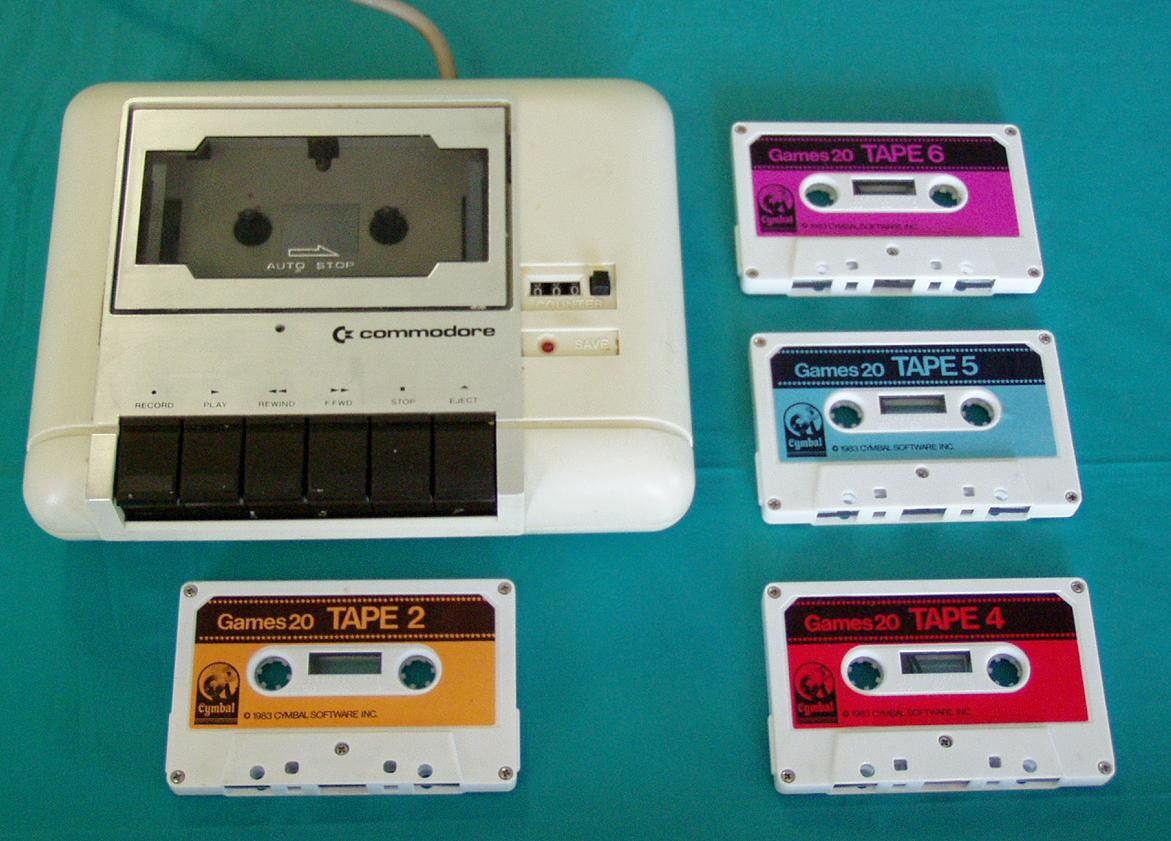
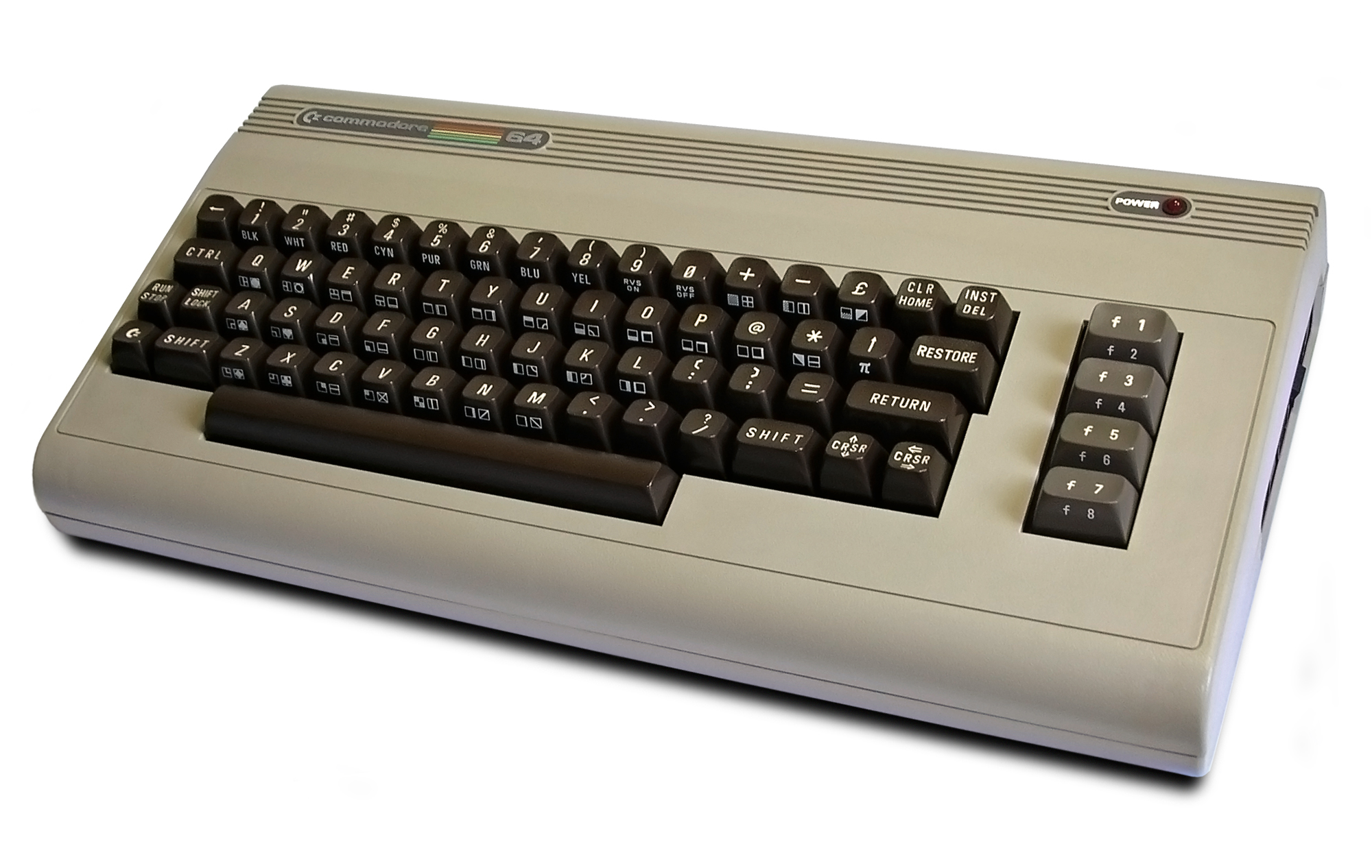
On January 9 (just a few days away), Commodore revealed the Commodore 64.  The computer cost $299, which was not horrid back then, but not exactly peanuts either.  The real downside was that EVERYTHING was extra - floppy storage was another $179 for the original 1541, if you could find one.  Most folks started off with the $99 tape drive.  Yes, kiddos, before games came on DVDs (or there was anything remotely referred to as 'the cloud,'), we had games that were stored on cassette tapes.  Oh, wait. You might not even know what cassette tapes are.  Yeesh.  Before MP3s and CDs, we had these plastic cases with a think ribbon of 'tape' that held our music.  Well, the same technology to store music was used to store data.


Aside from the affection Mac owners are known to have for their computers, Commodore owners probably 'loved' their computers the most.  No other company (again, aside from Apple) garnered such admiration for a line of computers as Commodore.  Even today, you can ask people about their old '64s and watch as their eyes glaze over, their head tilts slightly to one side and their mind wanders back to a time of 8-bit wonders.


Some time ago, several years actually, several groups/companies came up with C64 emulators that would run on PCs.  Now, you could have all the nostalgia running in a window on your computer while you surfed the web, played other games, or did just about anything else you wanted to.  The entire C64 collection of games fits on a series of DVDs.

And then, Commodore was reignited and a new company brought forth a C64 clone.  The new machine is a PC running the emulator.  It also costs over 3x as much as the original, listing for $999 from CommodoreUSA.  No thanks.  Even if I bought the emulator and the DVD series, I'd still have change left over for my card hobby.  So it wouldn't LOOK like a C64. Who cares. I digress.


As for looking ahead, I managed a paltry 80 posts in 2011.  I posted more than that during my first year of blogging when I really had no idea what I was doing or why.  I am not a "resolutions" kind of person, but I absolutely resolve to post more in 2012.  What accounts for the lack of posts?  I'm ashamed to admit it, but Facebook and Twitter have become my main outlet streams.  That's not a bad thing, really, but I am a huge proponent of blogging, especially in education, and so I need to champion that which I, er, champion.

Of course, the first round of solid postings will come from the annual "American Idol" rundown.  I also plan to post some of my more in-depth musings on here and let those take on a life of their own here and in the social networking realms.  For instance, my thoughts on public breastfeeding sparked quite a conversation on Facebook.  It would have been fun to start that here and then follow it in both circles, possibly cross-posting back here as to additional comments, etc.

I have been putting off two novels as well.  I don't mean reading them - I mean writing them.  So, the next "resolution" on my list: Write 'em.  I've actually decided that "Summer Breaks" will become a larger version of itself to be entitled, "Extended Summer Breaks."  It will be cleaned up and several elements expanded based on feedback I've received from friends and reviews.  The other novel, "Somewhere Main and Maple Meet," is already 2/3rds complete in first draft, so I'm looking to finish it up and get it published as well.  In fact, I plan to shop that one through Christian publishing circles to see if I can get a tradition publisher to pick it up.  I'll keep you posted.

My final "real" resolution relates to my bucket list.  I am picking one item to cross off the list and will focus my attention throughout the year to make it happen.  Not sure which item yet, but once I choose, that will be the one I try to knock off.

Thanks to everyone who comes by to read my ramblings and musings, and I hope to provide you much more entertainment in 2012 than in 2011.

Nov 30, 2010

Emily's Christmas Story

Emily has been studying "-ing" words this week in school.  She decided to write a Christmas story using all of her -ing spelling words.  She had me scan it in so she could share printouts with us.  I took the liberty of posting the story here (click on images to enlarge):


*"fanted" = "fainted"

Nov 1, 2010

NaNoWriMo - SLOW start...

The site is down.  My user account shows up as an invalid user with a php error on the site.  Things are off to a slow start in the world of NaNoWriMo this year.  To top it off, I gave up writing after just 350 words this evening - the first night.

Where is my motivation?  What is going on with me this go-round?  Is it the World Series?  Is it the knowing how some of the story will go?  Is it the weather?  I have no answers.  I just know that I've got a long road ahead if I am going to reach that 50,000 word goal.

Like the little train that has graduated from children's story to cliche', I know I can do it.  Once I find my rhythm, things will flow from my fingertips.  Right now, I have nearly written more words for this blog post than I have for my next novel.  It should come easier than this.  After all, I know the characters.  I know the setting.  I know some of the plot elements.  It is lying in wait, bubbling just below the surface.  I can feel the words coursing through my veins, my capillaries, my arteries.  I feel the ebb and flow of story movement, and like a flood of water behind a dam, once the crack is forged, things will come fast and hard, leaving certain death and destruction in its path.

"Lost Summer" may start out as a trickle, but soon, it will rush through, over and around the folks of Appleton!  What will remain in its wake?

Oct 11, 2010

Misinterpretation of "The Stream's Secret"

While working on my Master's degree, I took a class that focused on the Pre-Raphaelite Brotherhood.  One of Dante Gabriel Rossetti'smost famous poems is "The Stream's Secret."  It is a haunting, romantic tale.  At least, that's how *I* took it.  In fact, I wrote a short-short story based on what I thought was happening in the poem.  Turns out my interpretation received very mixed reviews.  At least it sparked conversation. Note: When this was written, I was still pretty 'young' in my writing development.

A Misinterpretation of "The Stream's Secret" by David W. Henderson (c)2000, 2010

Peter knelt in the long, thick grass along the stream. Intently, he watched the water flow over rocks, under branches, and around a few grassy knolls. He could see the bottom of the stream perfectly. The rocks and pebbles danced along the bed without moving. Light played with the rippling water, animating the inanimate. He tilted his head slightly, his right ear bent ever so carefully toward the bubbling brook. He held his breath. The bubbling, fumbling stream did not speak to him. He sighed deeply and shook his head.

"Did you not see?" Peter asked the stream. "Did you not hear?" he yelled out, clenching his fists at the brook. He stood, his well-pressed trousers now wrinkled and stained green from the grass. He paid no attention to his pants. Slowly, he turned, stretching his arms out in a wide arc to the place that had been behind him.

"She was here," he told no one. Taking two steps away from the stream, he pointed at the ground where he now stood. "She was right here," he repeated loudly. He fell to his knees, slumping over himself until his hair rested on the ground. Tears fell from his eyes onto the grass. His body heaved as he sobbed, still crunched like a child hiding from the seeker. The mucus from his nose dangled toward the ground, swaying with each sob-ridden breath he took. Finally, it broke, landing in a pool beneath his nose.

Suddenly, he slammed one fist into the ground. Absently, we wiped his pressed jacket sleeve across his face, taking with it tears and snot and pain. He stood, ignoring the grass stains on his sleeves where his elbows had rested on the ground. Spinning on one heel, he turned to face the babbling brook once again.

"Why won't you talk to me?" he scorned. He took two steps back toward the stream, brought his leg back and kicked his patent leather shoe at the water. A plume erupted as his foot surfaced from the depths of the stream. Ignoring the soaked sock in his shoe, he kicked at the stream once more. Again, the stream answered with a fountain of water where his foot exited through the surface. Now, the stirred dirt from the bed hid the stones and rocks that were once visible. The stream's flow carried the sediment away from Peter, as it carried Sarah not long ago.

Sarah was beautiful. He long, coppery hair flowed down over her shoulders and covered her breasts. She was exquisite. Her long, cream-colored arms could reach the night sky and pluck out a star. Her shapely, toned legs coulee leap a rainbow and land her in the pot of gold at the end of it. Her satiny smooth skin glistened in the morning dew as she lay in the grass.

Peter turned, looking over his shoulder at the spot where he had been sobbing. "As she lay in the grass," he said aloud. His eyes darkened as he turned his gaze back toward the stream. That horrid stream. That keeper of secrets. His heart pounded in his chest. His breathing had become deep, heavy. He clenched his jaw tight, then spat into the water. "Keeper of secrets," he growled.

His mind flashed - Sarah lay in the grass, nude. He blinked at the stream. Flash - her lover beside her. He stared at a rock on the stream's bed. Flash - her lover slain. Rippling waves cannot break his stare. Flash - his around her throat. His jaw clenched tighter. He dragged her into the stream. His jaw moved, emitting a sharp "pop" as his teeth rubbed against each other. Sarah kicked, squirmed, twisted. Her face plunged into the stream. He wide eyes stared at Peter in disbelief. Her mouth moved, "Peter! Peter!" Her lips formed words, but make no sound. "No! Peter!" Air rushed in and out of her lungs, making bubbles at the surface. The babbling brook became violent at the intrusion. Dirt, rocks and sand all tossed and churned wildly as Sarah splashed in the water.

A small, wry smile crept on Peter's face. He blinked twice then focused his gazed on the spot where Sarah drank her last breath. The smile on Peter's face softened as he pictured her there in the water. The stream bubbled around and passed her. Her face rested above the surface, peaceful and calm. Sarah stared blankly at the stars above. Peter leaned over her and slipped his arms around her. His lips covered her soft, smooth cheeks with tender kisses. He took one hand from behind her back and gently stroked her hair as it waved lazily in the stream. Tenderly, he kissed her lips as softly as a new lover on his wedding night. He gazed into Sarah's lifeless eyes, then closed her eyelids, sealing each with a gentle kiss. Again, he slipped both of his arms around her and embraced her, pulling their two bodies together. After a few moments, he released her. She lingered at first, not wanting to leave her lover. But, finally, the stream urged her along and she relented. She began to move, but stopped suddenly as she planted her feet into the stream's bed.

Peter's eyes widened at the sight of his Sarah's hesitation. His heart raced as the gravity of his mistake comes to his full attention. Sarah was not dead after all! She had stopped to be with him! He smiled - a small, shaky laugh escaped his lips. He stood, meaning to help her out of the water. As he bent over her, she moved away from him. Her feet still seemed planted, but her body drifted away from his reaching arm. The stream continued to push her, helping her along as it turned her body away from his. Her head pointed downstream. Peter's arms dropped to his side and she slumped to the ground beside the stream. Sarah drifted away from him, forever.


If you'd like to read the poem, you can find it: http://www.poetryfoundation.org/archive/poem.html?id=174291

Jul 5, 2010

A novel update - All part of the process

As you may recall, last November I took part in the National Novel Writing Month challenge (write 50,000 words in 30 days).  This helped me move my long-slumbering novel-in-progress from paper weight to actual paper.  Once the contest was over, I took a little time to soak up my self-congratulatory celebration then got back to work.

Getting back to work meant ironing out some of the rough spots, making first-round edits, and turning the thing loose to a couple folks that asked to read and review it (with the added bonus of editing it).  I don't know what the average time it takes for the rewriting and editing process takes for a novel, but I can tell you it is a daunting task.  There is no way I could have done it without the help of the folks that lent a hand!  They'll be named in my acknowledgments once things get to that phase, for sure!

As of today, I have officially "finished" my novel!  I put that in quotes because if I choose to seek out an agent, editor, and go the traditional publishing route, then I am sure they will require that I do some editing.  Then again, maybe not since I've gone through that already.  You just never know how a certain editor will react.

So, now the question that occupies my mind centers on whether I want to seek out an agent or go the self-publishing route like I did with my short story collection.  There are benefits and drawbacks to each route.

Agency means finding someone that I get along with and that really wants to work with me as we develop my writing career.  There might be a lot of time involved, and there is the possibility of a false start or two.  The upside is that if everything works out, it could launch a new chapter in my life.

Self-publishing means I have control of the finished product.  The downsides mainly involve distribution and publicity.  Exposure will be much less in a self-publishing scenario, at least at first.  There have been plenty of authors that have proved very successful going the self-publishing route.  I'm just not necessarily a 'sales guy.'  The novel is in a form that I am happy with. I had a member of my professional learning network on Plurk actually provide the cover art I'd like to use.  The book is essentially print-ready from my perspective.

The first question most people ask is, "What's your book about?"  In a single sentence, I believe this describes it best:

Summer Breaks - After witnessing a horrific car crash in his neighborhood, nine year-old Corey Decker and his friends begin their summer break searching for a "madman" rumored to live in the woods nearby.

I'll let you know which path leads to the published novel!

If you've got any input, I'd like to hear it!  Know an agent that might be interested?  Feel free to pass my info along to them and/or their info on to me.  Have a preference/recommendation as to the agent/self-publishing route, let me know. 

Jun 26, 2010

Not the sharpest tack


Have you ever done something stupid that you wished you could take back immediately after you did it? Feel free to share. You may be asking yourself, "Why would anyone share such things in the public forum that is 'The Internet?'" I can't answer that for you, the reader, but for me, writing about my past experiences (both good and bad) helps me remember those things. Why would I want to remember the things probably better forgotten? Think about the stories your parents or grandparents (or aunts and uncles) told you as you were growing up. How many of those stories involved some mishap that later turned the whole incident into something humorous (though may not have been at the time it happened)?

Fine, so write them down, sure, but why share them with the world? Because when we can laugh at ourselves, or learn from our own mistakes, we find others that may have done similar things. We may also find a memory that we can then turn into a short story or a full-on novel if we really get going.

Here are a couple examples from my own experiences. As best I can, I will also include the approximate age this happened. Why? because you'll see that you don't have to be a child to do dumb things.


When I was in second or third grade (7 or 8 yrs old), I had been watching Bugs Bunny cartoons on TV one day. The show where Bugs helps Betsy Ross come up with a pattern for the flag gave me an idea. I went out into the front yard and laid a rake on the ground with the teeth facing skyward. I paced back and forth a few times. On the last time, I stepped hard down on the teeth of the rake. The handle came directly at my face and smacked me squarely on the forehead, side of my nose, and my chin. Much like the cartoon, I saw plenty of stars. Unlike the cartoon, however, I fell backward onto the ground, having been nearly knocked out by infinite wisdom. I don't particularly remember much between falling and getting back up again. I can say with authority that one should not attempt the things one sees in a cartoon. I'd be especially wary of the Roadrunner ones.


My father refereed soccer for many years while I was growing up. For a time, I too earned money overseeing matches. I suppose I was in ninth grade for this particular adventure. Dad worked a tournament in the Southside of Pittsburgh. After the matches were over, my brother and I ran on to the field and began kicking the ball around. We dribbled, shot, tries tricks, and generally goofed around while Mom and Dad gathered everything to head home. I stood about midfield and kicked the ball at my brother, who was in one of the goals. He blocked the shot and kicked the ball back at me. As the ball got close, I started dribbling backward. The ball moved between my legs and under my feet as I continued to move further and further away from him. As I gained speed in this backward motion, I suddenly found myself lying on the ground with a powerful headache. I had backed myself full-speed into one of the goal posts! My brother came over to check on me. My parents, who must have only seen him walking toward me and me lying on the ground, called out, "Get up and let's go!" It wasn't until the ride home that I told my folks why I had been on the ground. When quizzed as to why he didn't stop me, my brother said, "Well, I thought you were going to turn around or stop. I didn't think you'd run into the goal post."


In high school (this would be 10th grade), a friend of mine offered to drive me home in his truck. We lived in an apartment in Westminster, Colorado. We pulled into the parking lot and he stopped to let me out. I opened the door and he suddenly gunned the vehicle into motion. Rather than shutting the door, I jumped from the moving truck. As I flew through the air, I pictured myself landing hard and rolling across the pavement. Rather than face that, I managed to reach back and grab the door handle of the truck. I slammed against the side and my legs dragged across the ground, tearing a large hole in my jeans at the knees. The truck stopped and my friend said, "What the heck are you doing!?" "I was jumping out to get home." "What the heck would you do that for!?" Honestly, I hadn't lived in the area long and I didn't know if he was going to let me out or not. I told him, "I didn't think you'd let me out." He laughed. "Man, that is the craziest thing I have seen anyone do!" You would think I had learned not to do such things in the future. Nope.


As a sophomore (or maybe freshman, hard to remember) in college, a group of friends and I were up late after going to the movies. Rather than heading back to the dorm, we went to a nearby park. We played on the see-saws, rode the swings, and generally made fools of ourselves. As the swinging continued, we decided to see who could jump the farthest while the swing was in motion. I'm not sure what happened, but when it came my turn, I got the swing going high enough that it at least appeared to reach its peak parallel to the bar that held the chains. As I came forward from the backswing, I thrust myself out of the seat and into the air. As in my previous story, I suddenly questioned my actions midflight. I grabbed the chain and fell straight to the ground. As everyone laughed, I checked myself for signs of destruction. The only thing bruised: my ego.


Naturally, I have done many other things that left eyewitnesses scratching their heads. Each of these tales from true events could be expanded into longer stories and/or combined into a novelization.

So, I pose to you the question I asked at the beginning: Have you ever done something stupid that you wished you could take back immediately after you did it?

Feb 5, 2010

Talking about Writing - Getting Started

I've published one collection of short stories so far.  I have one novel that is somewhere between "close to the end" and "catching a second wind."  Why am I telling you this?  Because, I'm just a normal, everyday guy.  Just like you.  Unless you're a woman, in which case I should probably say, "I am a normal, everyday person."  Then again, the implication is that I am normal, whatever that means.  I digress, as I often do.

My point is this: Anyone can write.  And, in my opinion, unlike the Ratatouille saying "Anyone can, but not everyone should," I say that everyone should write at least once.  Write some short stories, write some poems, write a novel, write some of each, whatever hits your fancy.

For the purposes of this post, I will concentrate on the "starter's blocks" that often come long before anyone sits down to start hammering out their own creativity onto the typewritten page (or computer screen). 

Block #1 - "I don't have anything to say" - Some writing guides would argue that the fact you just said you had nothing to say was, in fact, something to say.  Here's my take on it: You only think you have nothing to say.  We all have plenty to say every day - we talk to our friends, our co-workers, neighbors, families, the checkout clerk at Wal-Mart that decides to share every detail of her life when all you really want is to go home... Lots of things to say (or hear) from people you encounter each day.  So, it's not that you don't have anything to say, but you might counter here (and most likely are as you read this) with Block #2.

Block #2 - "I don't have anything interesting to say" - Ah!  We have exposed one of the fears of writing - rejection - and we haven't even started writing yet!  Think back to the last book or story you read.  What made you read it?  What made you want to read it?  Right now, you may be thinking, "It was sad, scary, poignant - interesting!" Well, I would hope so, or else what was the point, right?  Now, if you have the book handy, look through it.  What do you see?  How is it written?  What does the author do that made it an interesting read?  Usually, the answer is: nothing special.  In truth, the story in the book was probably a series of events with a handful of people that led you down a path.  Think about talking to folks you know.  How do those stories usually unfold?  They usually go something like this:
---Person 1 (call her Patty): "You should have seen Jim last night!"
---Person 2 (call her Rachel): "What happened!?"
---Patty: "We had gone out to Dino's for supper, and when the waiter brought our water glasses to the table, he tripped and spilled the drinks all over Jim!"
---Rachel: (gasps, putting her hand to her mouth), "No way!" she says as she starts to laugh. "What happened after that!?"
---Patty: "Oh my gosh!  Jim is sitting there, water is pouring down his head into his lap. Oh, he was wearing the new shirt I got him for Christmas! I just realized that!"

You see where I'm going, right?  Just an office conversation.  Were you interested? Would you like to know what happened next?  Maybe. Depends on you as a reader to determine your own interest level.  What about me as the writer?  How do I make that story interesting?  I feed you tidbits.  What, in my few lines, would you like to know?  What's the restaurant look like?  What do Patty and Rachel look like?  What kind of person is Jim?  How does he react?  You can do the same thing.  It may take some practice, but you can do it.  The easiest way to start?  Write an actual conversation as best you remember it - use one that made you laugh or brought tears to your eyes.  Believe me, if it affected you, it will affect (that is, be interesting) to others.  And, that brings us to another block.

Block #3 - "I've heard people say, 'write what you know,' but I don't know anything." - I hate that advice.  To me, for me, it is the worst possible thing to say to someone.  Because it is too generic.  It's like most fortunes from a cookie.  When I write, I usually have no idea what's going to come out.  Then again, sometimes I have the topic or maybe the people, and things grow from there.  But, what do I know?  Do I know about hanging on a wooden cross because I had been caught and thrown in jail?  Do I know what hanging on the cross next to Jesus Christ was like?  Of course not.  Do I know what winning the lottery is like?  I wish!  But, no.  Now, can I imagine what things might be like sitting in a jail cell as a crowd of people begin shouting for some guy to killed?  Why not, right?  Can I imagine what winning the lottery would be like?  Heck yeah, almost everyone I know does that!  Writing, for me and I hope to show that it can be for you too, is a way to express the imagination we have running around in our heads.  Forget "what you know."  I am a Technology Coordinator - a techie.  None of my stories (that I can recall) have anything to do with techie stuff.  Why not?  Because that's "what I know" and I have yet to imagine a story involving techie 'stuff.'  Forget "what you know."  I do like something else I heard, though: "Write what you think you might feel, or what you might want to feel."  Ah, now wait... There may be something there.  Pick a scenario (say, winning the lottery), make up a person's name.  What would that person do if s/he won the lottery?  "Yeah, but," you may be thinking, "do you know how many other people have written about that very same thing!?"  My response: at least one less than should have because YOU haven't yet.  What would that person feel?  Who would want your character's money?  Does the person have kids, a spouse, an ex-? What do they think about your character? About your character winning?  Happy? Jealous? Faking happiness but really jealous?  Would someone kill for that money?  Of course, it doesn't have to go that way - YOU make it go the way you want (or, go the way the story takes you).

Block #4 - "What if I am no good?  What if no one reads it?" - This is the block that kept me from publishing for more than ten years.  Frankly, if I had not heard about Lulu.com from a friend, I might still be hiding behind this block.  Most of us fear some kind of rejection.  So, how do we overcome it?  Stephen King did it by hanging every rejection letter he got on a nail in his wall.  As time wore on, the nail was replace by a railroad spike.  Yes, that's right. And, yes, I am talking about THAT Stephen King.  He has said that to this day, he keeps those rejections.  I don't know that I could handle that.  But, I have found there are several things one can do to help combat this block. 
  1. Find someone you trust - a family member, a friend, a co-worker - and let them know that you have started writing and that you'd like to bounce a story or two off them.  Let me tell you, you need to select someone that you don't mind brutal honesty.  Especially if they are not writers themselves.  BUT, even if that one person doesn't like the story, it's not the end.  Why not?  They may not like your style, or the subject matter, or the font you used. Seriously.  What you want from them, though, is a review/critique of the writing itself - wording, rhythm, etc.
  2. Find a fellow writer or editor via local college or social network - Heck, ask me.  I can't speak for all writer, of course, but I'd love to read someone else's writing.  A fellow writer is much more apt to critique/criticize the WRITING and not the WRITER.  There is nothing wrong with YOU as a person just because you have to work on technique, phrasing, pacing, etc.  I think all writers strive for improvement. Or I hope so.
  3. Take the "Who cares" approach - not an easy one because it means you are letting your ego take a hike and you are going to put yourself out there regardless.  That's the approach I took.  Once I got on Lulu.com (and there are plenty of other self-publishing sites to choose from, or you can submit to publishers in the traditional manner), I decided that I was going to put my stories out there and let them rise or fall.  Does that mean I don't care if no one buys the book?  Of course not! I would LOVE to see a million sales.  Or even a hundred.  But, what mattered to me was that I did it - I wrote some stories, reviewed them, edited them, then published them.  In my case, I decided to offer up the PDF version for free.  Why on earth would I just give away my hard work?  I figure there are people who will check it out simply based on curiosity.  And, I figure some folks prefer to have a book-in-hand.  I know of one person that bought a hard copy after reading "Hero" in the PDF.  You can do the same thing - put it out there and let it ride.  Perhaps knowing you have something in print will light a fire to write more.  Or, maybe it helps cross one thing off your "bucket list."  Either way, you can tell the world "I'm Published!"
I've only covered a few of the blocks people may use when first starting out on the road to authorship, but hopefully I've given you a few ideas on how to poke holes in those blocks.  I'm not saying my advice will bulldoze the blocks, just saying that if you remove enough bricks, the roadblock will fall down all by itself.

Feel free to comment, criticize, critique, etc.  After all, I'm just an everyday guy trying to help.  And, I'll be happy to edit this post to reflect the comments I feel should be incorporated.